Digital turning point at Aker Solutions
May 7, 2026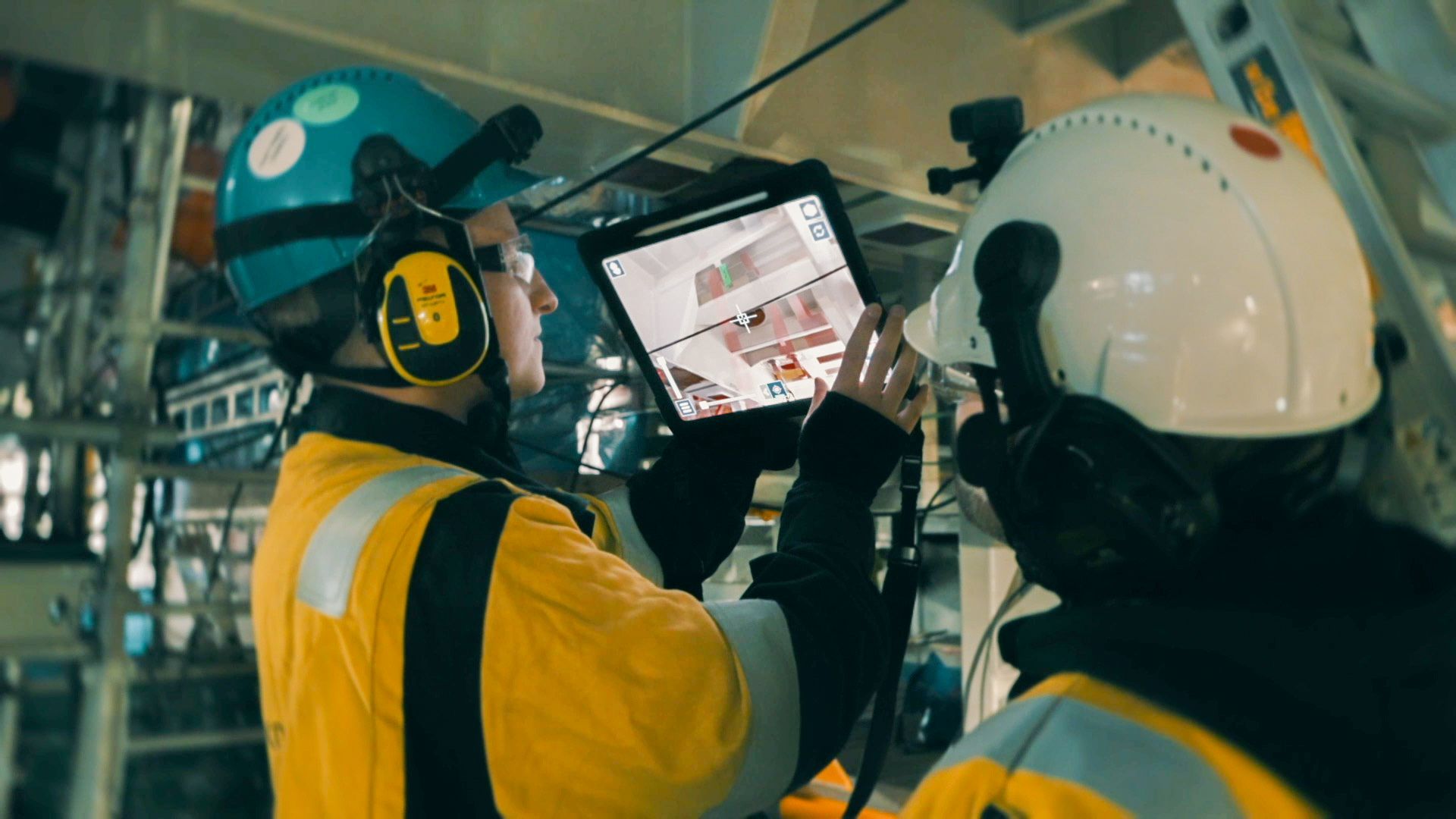
Fragmented data, inconsistent processes, and a reliance on documents and manual workflows that could no longer keep pace with modern project requirements. In the early 2020s, each of the Aker companies faced its own set of digital challenges. Several initiatives had been set up across the group to create customer value through digitalization.
Our customers had similar needs: to reduce the cost of operating assets, achieve more automation, and rely less on manual work. Meanwhile, in the external world, technology matured at exactly the right moment.
To address both internal needs for efficiency, reduced costs and faster deliveries, and growing customer demand for more automated and unmanned operations, Aker encouraged a strategic alliance across the group. This led to the formation of the Aker Digital Alliance (ADA), in 2023, bringing together capabilities in 3D, augmented reality, digital twins, and additive manufacturing.
The best of Aker together
Building on decades of industry experience in Aker, ADA connects the strengths of Aker Solutions, Aker BP, Cognite and Aize. By combining deep domain expertise with rapidly evolving technology, ADA develops shared digital solutions that benefit the entire value chain: from engineering and construction, to commissioning and operations.
This integrated approach is fast becoming a strategic advantage for customers. By consolidating previously separate workstreams into a single integrated architecture with a unified data foundation, ADA outputs drive productivity and enable customers to realize value at every stage of the asset lifecycle.
We see a new paradigm emerging for AI-enabled asset-lifecycle management. As we build, maintain and modify physical assets, we evolve a digital twin that connects all stakeholders, for tighter collaboration and smarter, faster decision making.
Nina Solie, ADA 1.0 Program Director
From documents to data
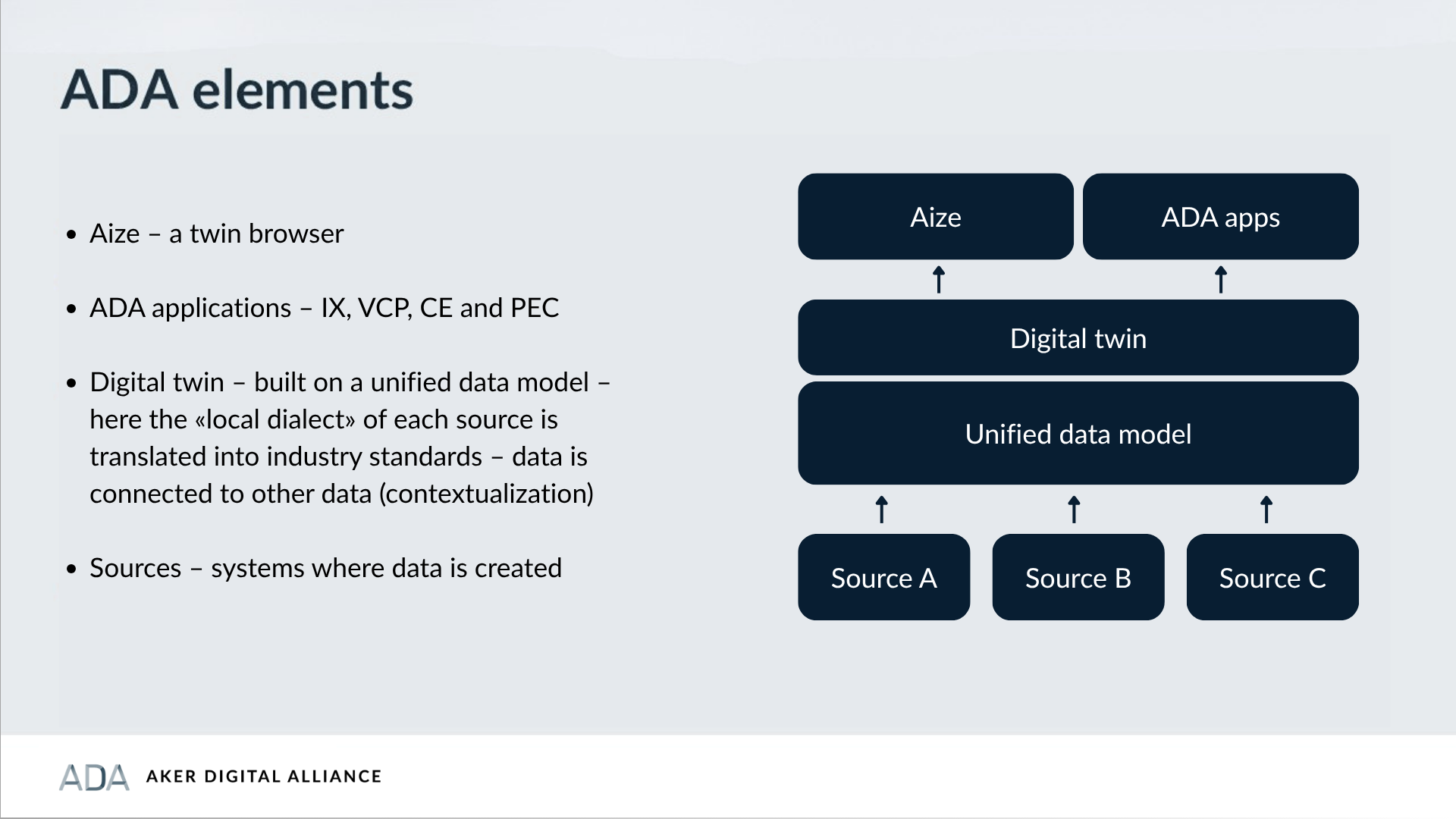
Central to ADA’s work is a "digital twin". This unified data foundation structures, contextualizes, and connects data from across disciplines and systems. So, instead of information lying hidden in PDFs, emails, or isolated databases, through the ADA platform real-time data is available to everyone who needs it.
The alliance has developed a suite of 5 applications:
- IX (Information Exchange) – enables seamless, digital data flow
- VCP (Visual Construction Planner) – brings work processes into 3D
- CE (Constructability Engine) – identifies constructability issues early
- PEC (Project Execution Control) – provides real-time project status and deviations
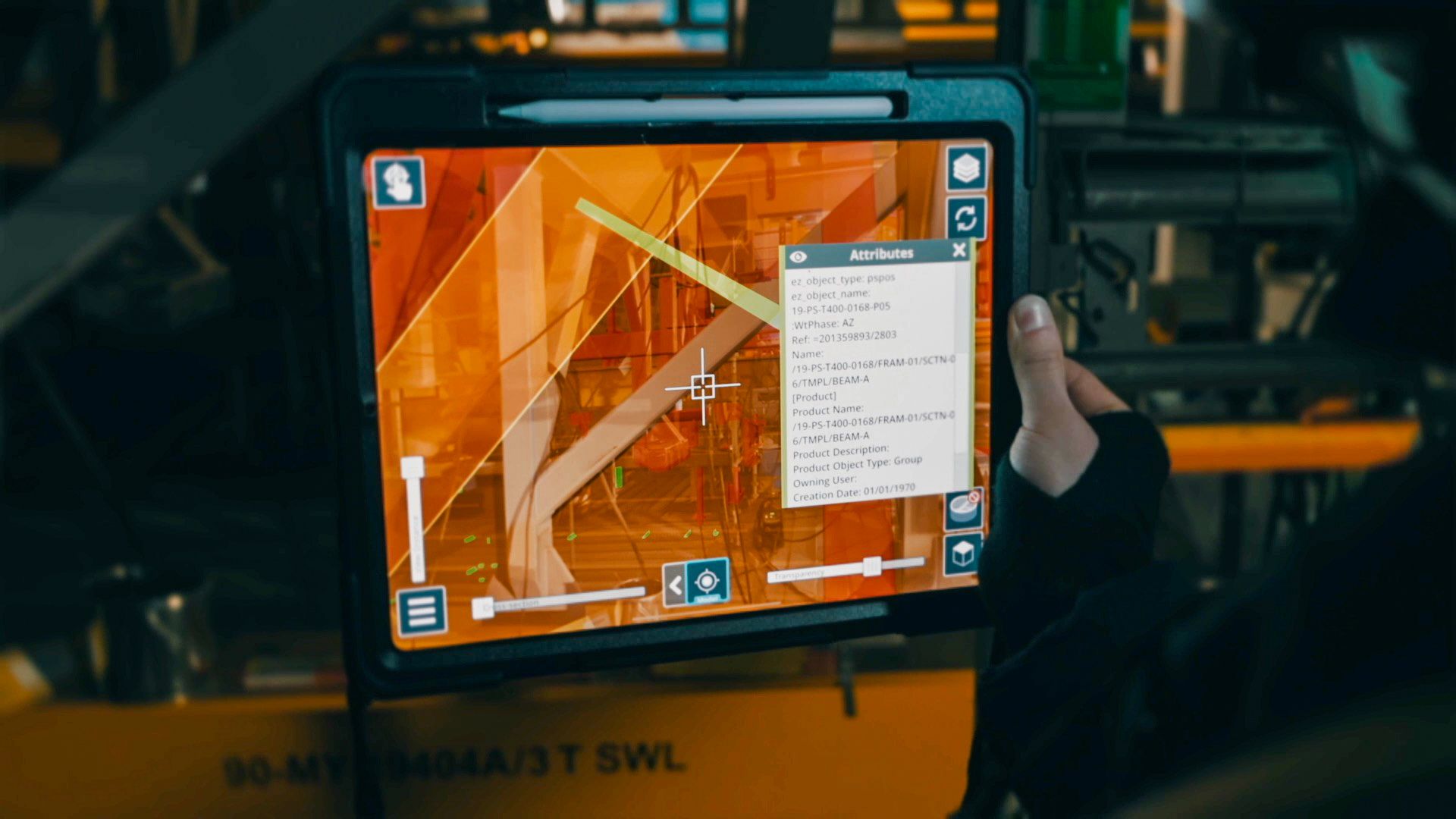
- Aize – a tool for browsing the digital-twin and viewing data
Together, they change how projects are planned, reviewed, and built, shifting the industry from manual, document-driven handovers to fully digital, model-based workflows.
Adoption of these tools continues to accelerate. Measured monthly, Aize now has more than 2,000 active users across ongoing projects. Uptake has been particularly strong in the commissioning phase, where access to trusted, real‑time data through a digital twin supports faster issue resolution, fewer late changes, and closer collaboration between engineering, construction, and site teams. This marks an important shift from pilot use toward everyday digital execution across the project lifecycle.
Benefits across applications include:
- Improved data quality and consistent processes across projects
- Earlier identification of errors and deviations in the engineering phase, before construction
- Reduced interpretation and mistakes in the field, through 3D models
- Better collaboration between disciplines
- AI-based automation enabled through the digital twin
The ambition is to contribute to products and solutions that are applicable and scalable for other companies and industries, and in that way create impact that goes beyond the Aker group.
Magnus Smedegaard, VP New Build, DigiTech
Proving the value
Quantifying the value of digital initiatives is inherently challenging. When many factors influence a project, isolating a single effect is difficult. In schedule-driven environments, hours and costs can multiply to meet deadlines. And while digital initiatives free up time, it’s often reallocated rather than removed as cost.
To address this, ADA uses clear value hypotheses for each application and continuously tracks actual usage — daily, weekly, monthly— measuring real activity against these assumptions. This is reinforced through user surveys, feedback loops, and regular validation of underlying hypotheses. The approach isn’t an exact science, but it’s systematic, consistent, and increasingly trusted. Over time, it has built enough credibility to feed directly into new project estimates.
Results so far indicate that the original ADA 1.0 business case has been more than fully realised, with value creation exceeding initial expectations. Improved execution predictability provides a solid foundation for continuing to develop and expand data‑driven delivery models across all our projects.
Platform for the future
As the energy market evolves - both toward renewables and more competitive contracting models, the need for radical efficiency will only grow. The groundwork laid by ADA 1.0 gives Aker Solutions a unified digital backbone strong enough to meet these demands.
But the real prize lies ahead: the data foundation and AI capabilities being built in ADA 2.0 are what will make artificial intelligence truly deliver, and it is this foundation that will become a competitive edge.